Navigating Opposition: Counterprotest Influence on White Supremacist Mobilization and Tactics
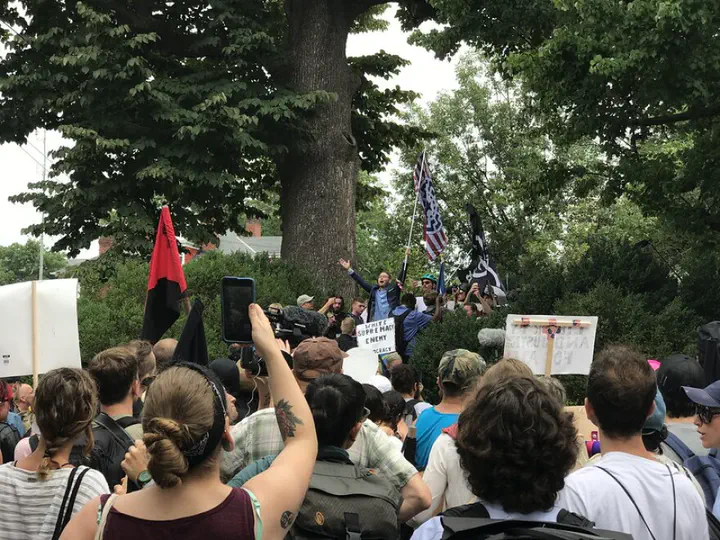
In this article published in American Behavioral Scientist, we examine how white surpemacist organizations dealth with counter-movements and their efforts to control their public image.
Abstract: How do white supremacist organizations respond, strategize, and understand counterprotests? With a unique dataset of 2 million chat messages from 2016 to 2020, we argue that white supremacist groups struggle to mitigate the harmful effects of counterprotesters. On the one hand, counterprotesters increase the collective action costs for white supremacists, forcing them to adopt avoidance tactics, such as organizing secretive or less visible rallies. Yet such evasive strategies often hinder efforts to mobilize large numbers of supporters. On the other hand, in an effort to maximize security, white supremacist groups may equip participants with protective gear or weapons. While this approach enhances preparedness, it simultaneously damages their public image by amplifying the movement’s social stigma. Moreover, their perceptions of counterprotester threats play a crucial role in shaping both their tactical choices and broader strategic orientations. Our findings shed light on the interconnectedness of these dynamics, offering new insights into countermovements.
Image from: https://www.wkyufm.org/news/2026-05-29/what-should-you-do-when-a-white-nationalist-group-comes-to-town

Alessandro Giuseppe Drago
Charles E. Scheidt Postdoctoral Fellow
My research interests include right wing movements, political sociology and populism